
Best dog car seat for Labrador Retriever: 5 hammock and cover picks for 2026
Key takeaways
- Labradors are too large for booster seats. The right setup is a hammock-style cover that spans the front and back seats, paired with a harness clipped to the seat belt.
- Hip and elbow dysplasia are the breed-defining health concerns. A low-entry hammock with a non-slip surface is easier on aging joints than asking a Lab to leap onto a bare bench seat.
- Labs shed heavily and love water. Any cover you buy should be machine-washable in a standard home washer; the marketing claim "wipe clean" is not the same as washable.
- The Active Pets XL hammock ($44.98, 50,831 reviews) is the most-purchased option for large dogs in our live Amazon catalog and the default recommendation for a Lab in a sedan or SUV back seat.
- For Labs that travel in the cargo area of an SUV, a crash-tested hard-sided crate strapped to the tie-down points is generally safer than any soft cover.
Labrador Retrievers are the second-most-registered breed in the US and the most common large dog in family vehicles. The booster-seat aisle does not exist for them; at 55 to 80 lbs of adult weight, a Lab sits on the bench seat or in the cargo area, and the product category is hammocks and seat covers, not boosters.
This guide picks the right product based on the two breed-specific concerns that actually affect car-safety decisions for Labs: their size (which dictates that they ride on the seat or in cargo) and their joints (which dictate how they get in and out). If you are looking for a general dog-car-safety overview, the crash-data guide covers what the testing organizations have found about pet restraints across all sizes.
Why Labradors do not use booster seats
Booster seats are designed for dogs under 25 lbs. A Lab weighing 70 lbs in a booster rated for 25 lbs will deform the frame, compress the cushion to nothing, and tear the seat-belt loops within a month. Beyond the structural failure, the booster does not contain a dog that size; the dog can step out of it like a child stepping out of a low chair. The right product for a Lab is a hammock or a bench-seat cover that occupies the whole back seat.
The hammock does three things for a large dog:
- It prevents footwell falls. When you brake hard, a 70 lb dog standing on the bench seat goes forward and down. The hammock catches them in the gap between the front and back seats, which is otherwise where they end up.
- It protects the upholstery. Labs shed, drool, and bring in mud. Without a cover, the leather or fabric back seat takes the hit. A washable cover takes the hit instead.
- It defines a contained space. The hammock walls give the dog a recognizable bed-like zone. Most Labs settle into it within a few rides, which reduces pacing and driver distraction.
What the hammock does not do is restrain the dog in a crash. That job belongs to a harness clipped to the seat belt. The hammock is the containment layer; the harness is the safety layer. Both matter, but they are not interchangeable.
The hip dysplasia problem
Roughly 12% of Labrador Retrievers will develop clinical hip dysplasia over their lifetime, per OFA breed statistics. Elbow dysplasia adds another 10%. For dogs over six years old, getting in and out of the car is often the first thing they refuse to do enthusiastically, and a Lab who hesitates to jump into the back seat is usually telling you something about their joints, not about their training.
Practical implications for which hammock you buy:
- Low-entry side panels. A hammock with high zippered side flaps closes the dog in but also raises the lip they have to step over. For Labs with joint pain, lower entry points are better.
- Non-slip surface. Plush quilted hammocks look comfortable, but the surface a Lab needs is one their nails can grip. Slipping on a smooth fabric surface mid-corner is harder on hips than sitting still on a textured one.
- A ramp, not a jump. For Labs over eight years old or any dog with diagnosed dysplasia, a portable pet ramp is the upgrade that prevents months of compensatory limping. The ramp is a separate purchase outside our hammock category.
Our 5 picks for Labrador Retrievers

Active Pets Black XL Dog Car Hammock
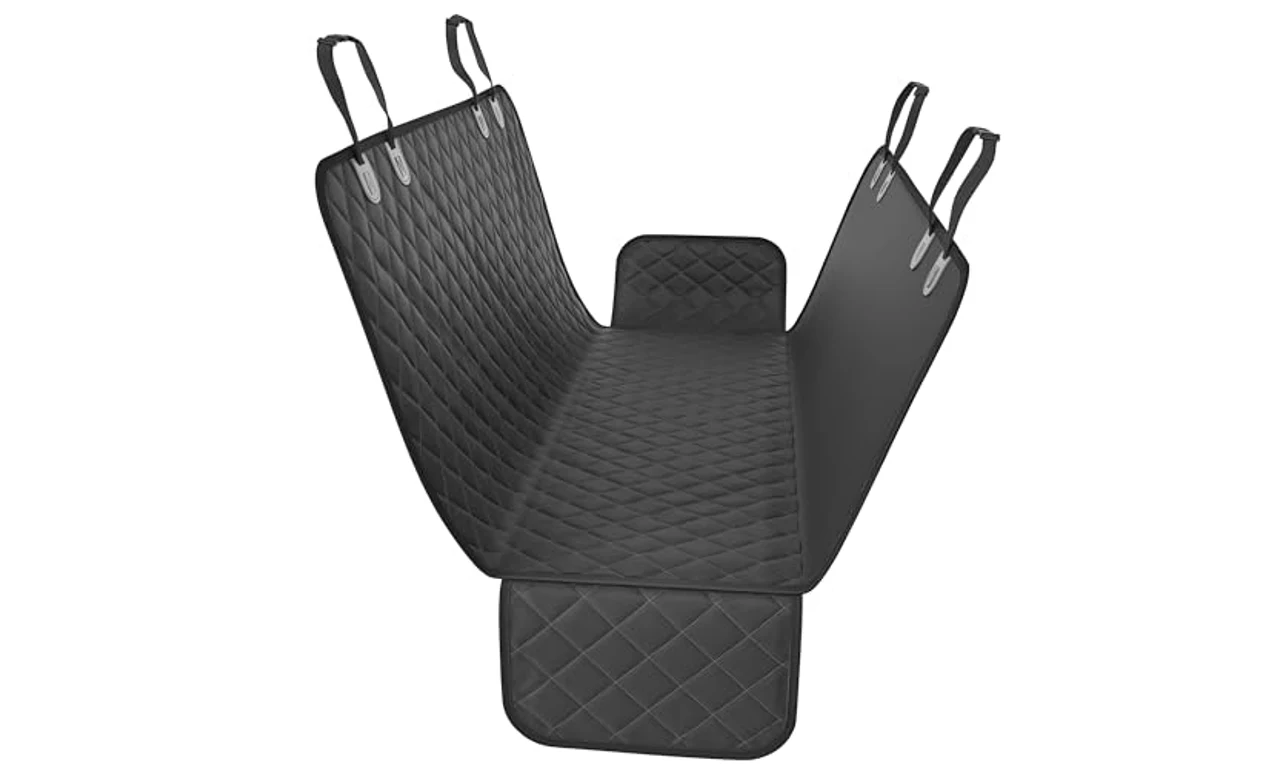
The Active Pets XL is the most-purchased hammock in the large-dog size class on Amazon and earns the default recommendation. The XL designation matters; it covers a full bench seat with side flaps that hang down to protect the doors, the seat-belt openings are reinforced with seat-belt webbing rather than just sewn slits, and the four anchor straps connect to the headrests on both sides for stability under cornering force.
Check price on Amazon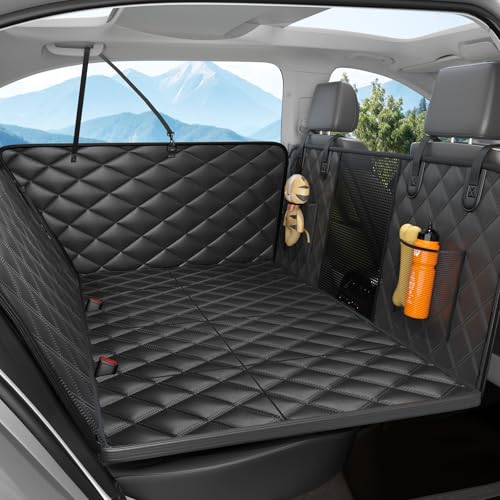
Eamefia Hard-Bottom Hammock
The price-conscious pick at under $30. Eight reinforced kickboards build a firm hard bottom that holds 400 lbs and gives a 70 lb Lab a flat, stable surface instead of a sagging sling, and the waterproof scratch-resistant shell shrugs off nails and mud. An extended barrier panel keeps the dog from sliding into the footwell during hard braking, it folds away to free the seat for passengers, and the whole thing machine-washes, which is the spec that matters for a year-round shedder.
Check price on Amazon
PETICON Mesh-Window Cover
The center mesh window lets you reach the dog from the front seat and lets an anxious Lab see the driver, which for dogs that need line-of-sight is the difference between settling and pacing. The same window adds airflow, a real factor for a 70 lb dog retaining heat on a long drive. Underneath, 8 rigid splice plates form a hard bottom rated to 400 lbs, so the surface stays flat and firm rather than pooling drool and water in the middle.
Check price on Amazon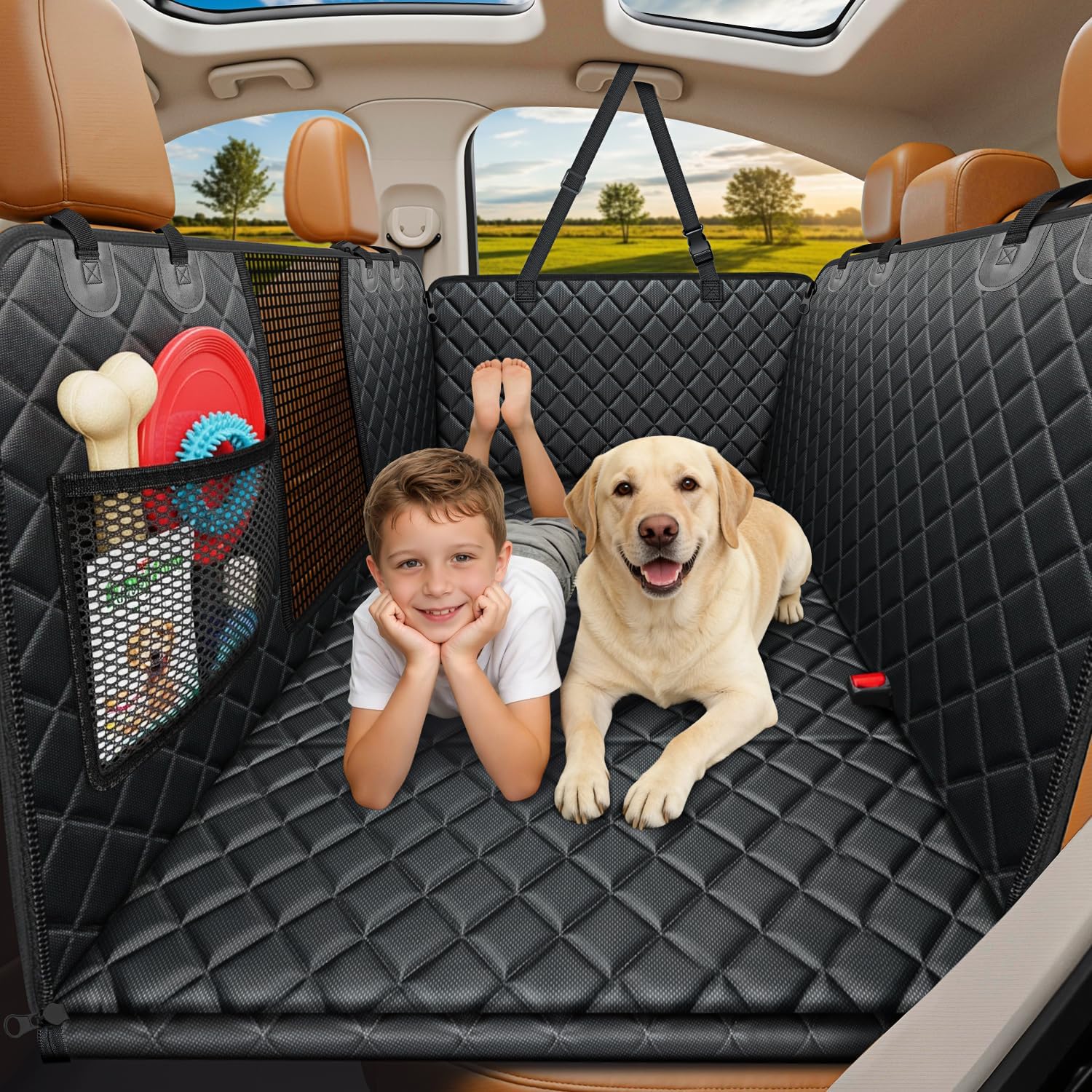
URPOWER Hard-Bottom Extender
The hard bottom is the differentiator for Labs that come back from the lake. A standard hammock pools water in the lowest point and the dog lies in it the whole ride; this firm platform lets water drain off and dries fast. It adds about 45 percent more flat space and holds 400 lbs, so a big Lab can stand and turn, and the 600D Oxford shell wipes clean after a muddy trail or a beach day.
Check price on Amazon
YoGi Prime Half Hammock
Not every Lab owner wants a full bench cover. If you also carry human passengers in the back seat, a half hammock blocks just the footwell gap while leaving the seat surface available. The half-hammock approach is the right answer for two-car households where the Lab uses one vehicle and the family uses both.
Check price on AmazonComparison at a glance
| Pick | Price | Rating | Best for | Coverage |
|---|---|---|---|---|
| Active Pets XL | $44.98 | 4.6 (50,831) | Default Lab pick | Full bench + door flaps |
| Eamefia Hammock | $29.99 | 4.5 (157) | Best value | Hard bottom, 400 lbs |
| PETICON Mesh-Window | $44.99 | 4.4 (199) | Anxious Labs | Hard bottom + center mesh |
| URPOWER Hard-Bottom | $38.99 | 4.5 (2,310) | Muddy / wet Labs | Hard bottom drains water |
| YoGi Half Hammock | $39.99 | 4.6 (6,671) | Shared family car | Half hammock only |
Cargo area vs back seat for Labs
If you drive an SUV or station wagon, the cargo area is a legitimate alternative to the back seat for a Lab. The choice depends on the dog's temperament and the vehicle's layout.
Cargo area, with a hard-sided crate
For Labs that travel calmly and for owners who use a crate at home, a crash-tested hard-sided crate strapped to the cargo area is generally the safest configuration. The crate isolates the dog from cabin debris and gives them a den-like enclosure. The two most-cited failure modes are: the crate is not anchored at all, or it is anchored to soft hooks not rated for the load. Use the vehicle's actual cargo tie-down points.
Back seat, with a hammock and harness
For Labs that prefer the company of their humans, or for vehicles without enough cargo room (most sedans, compact SUVs), the back seat plus hammock plus harness setup is appropriate. The harness is the load-bearing safety piece; the hammock is the containment and upholstery-protection piece.
Harness fit for Labradors
Labrador harnesses are simpler than brachycephalic-breed harnesses because Labs have proportional chest-to-neck ratios. The standard fit rules apply:
- Measure chest girth at the widest point, typically 28 to 36 inches for an adult Lab.
- The chest plate sits on the sternum, not the throat. A harness that rides up onto the trachea is dangerous.
- Two-finger rule. Two flat fingers should slide between the harness and the dog's body. Tighter restricts breathing on hot days; looser slips off in a crash.
- Tether length 6 to 12 inches. Longer tethers let the dog build momentum before the tether catches them. Shorter is safer.
Cleaning and shedding maintenance
Labradors shed in two seasonal waves and one continuous low-grade undercoat release year-round. Any cover you buy will need washing on a 2 to 4 week cycle. Check before purchase:
- Cover removability. A cover that is a single sewn piece washes in a home machine; one with rigid plastic stiffeners or non-removable foam pads does not.
- Drying. 600D Oxford fabric air-dries in a few hours. 900D takes longer. Plan around the wash schedule, especially in winter.
- Smell over time. A waterproof PVC backing prevents liquid soak-through but traps wet-dog smell. Washable mesh inner panels reduce this.
Heat, AC, and long drives
Labs handle heat better than brachycephalic breeds but worse than smaller dogs because of their mass. On long drives, run AC and avoid asking the dog to ride in direct sun. The car-color trap: black interiors get measurably hotter than light interiors on sunny days, and a 70 lb dog lying on a black hammock in direct sun absorbs heat faster than the cabin temperature gauge suggests. Open a back window slightly if you cannot run AC.
For the full ranked list of dog car hammocks and seat covers, see our hammock category page and seat cover page.
Frequently asked questions
What is the best dog car seat for a Labrador Retriever?
Labradors are too large for booster seats. The standard setup is a hammock-style cover that spans the front and back seats, paired with a harness clipped to the seat belt. The Active Pets XL hammock ($44.98, 50,831 Amazon reviews) is the most-purchased option in this size class.
Can a Lab use a booster seat?
No. Booster seats are rated for dogs under 25 lbs. An adult Lab at 55 to 80 lbs will deform the frame within weeks and the booster does not contain a dog that size in any meaningful way. Use a hammock or seat cover instead.
Is a hammock safe in a crash?
A hammock is a containment layer, not a crash restraint. It prevents the dog from falling into the footwell during hard braking and protects upholstery, but the crash-safety job belongs to the harness clipped to the seat belt. Hammocks and harnesses solve different problems and are used together, not interchangeably.
Should I use the cargo area instead of the back seat?
For Labs that travel calmly and owners who use a crate at home, a crash-tested hard-sided crate strapped to the cargo tie-down points is generally the safest configuration. For Labs that prefer human company, or for vehicles without enough cargo room, the back seat with hammock and harness is appropriate.
How do I wash a dog car hammock?
Most modern hammocks are designed for machine washing in a standard home washer on cold with mild detergent. Check the product page before purchase; some include rigid foam pads or plastic stiffeners that cannot be machine-washed and require spot cleaning only. For a Lab, plan on a 2 to 4 week wash cycle.
What if my Lab has hip dysplasia?
Choose a hammock with low entry walls and a non-slip surface so the dog does not have to jump high or slip on a smooth fabric. For Labs over eight or with diagnosed dysplasia, a portable pet ramp at the back door of the vehicle is the upgrade that prevents months of compensatory limping. Speak to your veterinarian about pain management before long drives.
Are hammocks safe with kids in the back seat?
Not at the same time. A full hammock occupies the entire bench seat and is not compatible with rear-facing car seats or with children who need to use the seat. For mixed family vehicles, a half hammock (the YoGi Prime pick) covers only the footwell gap and leaves the seat surface available, but is not appropriate when the dog and a child share the back seat.