
Best dog car seat for German Shepherd: 5 cargo and hammock picks for 2026
Key takeaways
- German Shepherds (50-90 lbs adult, working lines up to 100+ lbs) are too large for booster seats. The setup is a hammock or seat cover plus harness, or a crash-tested hard-sided crate in the cargo area of an SUV.
- Hip and elbow dysplasia affect roughly 20% of GSDs per OFA breed statistics, with some peer-reviewed studies reporting higher rates of 25 to 40 percent depending on lineage. The breed shows breed-specific posterior weakness early; a ramp at the back door is appropriate by age 7 for most GSDs.
- Working-line GSDs (police, protection, service) are usually larger than show-line GSDs and may need cargo crating rather than back-seat hammocks.
- The Active Pets XL hammock ($44.98, 50,831 reviews) is the standard recommendation for GSDs in sedans or compact SUVs. For full-size SUVs with cargo space, a hard-sided crate is the safer configuration.
- GSDs shed heavily but less than Goldens. Plan on a 2 to 4 week cover-wash cycle, more often during the twice-yearly heavy shed.
German Shepherds are one of the most-versatile working breeds in the US. The same breed sits in family minivans, police K-9 units, military deployments, and service-dog organizations. The car-seat decision depends on which version of the breed you have. Show-line GSDs at 55 to 75 lbs use the same hammock-and-harness setup as Labradors and Goldens. Working-line GSDs at 75 to 100+ lbs often outgrow the back-seat option entirely.
This guide addresses both. The breed-specific factor that matters most across both lines is hip dysplasia, which is the most-cited reason GSD owners change their car configuration over the dog's lifetime.
Why German Shepherds need a different conversation
The hip dysplasia problem
OFA breed statistics report roughly 20% of evaluated German Shepherds as dysplastic, with several peer-reviewed studies finding higher rates of 25 to 40 percent depending on lineage and country. Working-line GSDs tend to be disproportionately affected. The breed shows clinical signs earlier than most large breeds: stiffness after rest by age 5 is common, and full clinical disease often appears by 7. The car is one of the highest-load environments for affected GSDs because of the jump in and out and the prolonged stationary periods.
Practical implications:
- A ramp at the back door is appropriate by age 7. Earlier for working-line GSDs or any dog with diagnosed dysplasia. Jumping down from a sedan back seat is the single highest-load motion in daily GSD life.
- Non-slip hammock surface, not plush quilting. Slipping mid-corner stresses already-compromised hip joints.
- Low entry walls. A hammock with high zippered side flaps closes the dog in but raises the lip they have to step over. For GSDs with hip pain, low entry matters.
Working-line size considerations
Working-line GSDs (from European protection-sport lineages, police K-9 lines, or military breeding programs) are typically larger and more muscular than show-line GSDs. A working-line male can weigh 90 to 110 lbs and stand 28 inches at the shoulder. At that size:
- Standard hammocks may not fit. A 100 lb GSD on a hammock rated for 75 lbs deforms the structure. Look for XL-rated hammocks specifically.
- The back seat may not be the right answer at all. A 100 lb dog in a sedan back seat occupies the entire bench and effectively blocks the rear passenger area. For full-size SUVs with cargo space, the cargo area becomes the practical choice.
- Cargo crating with a hard-sided crate is the appropriate configuration for working-line dogs over 85 lbs, both for safety and for cabin usability.
Our 5 picks for German Shepherds

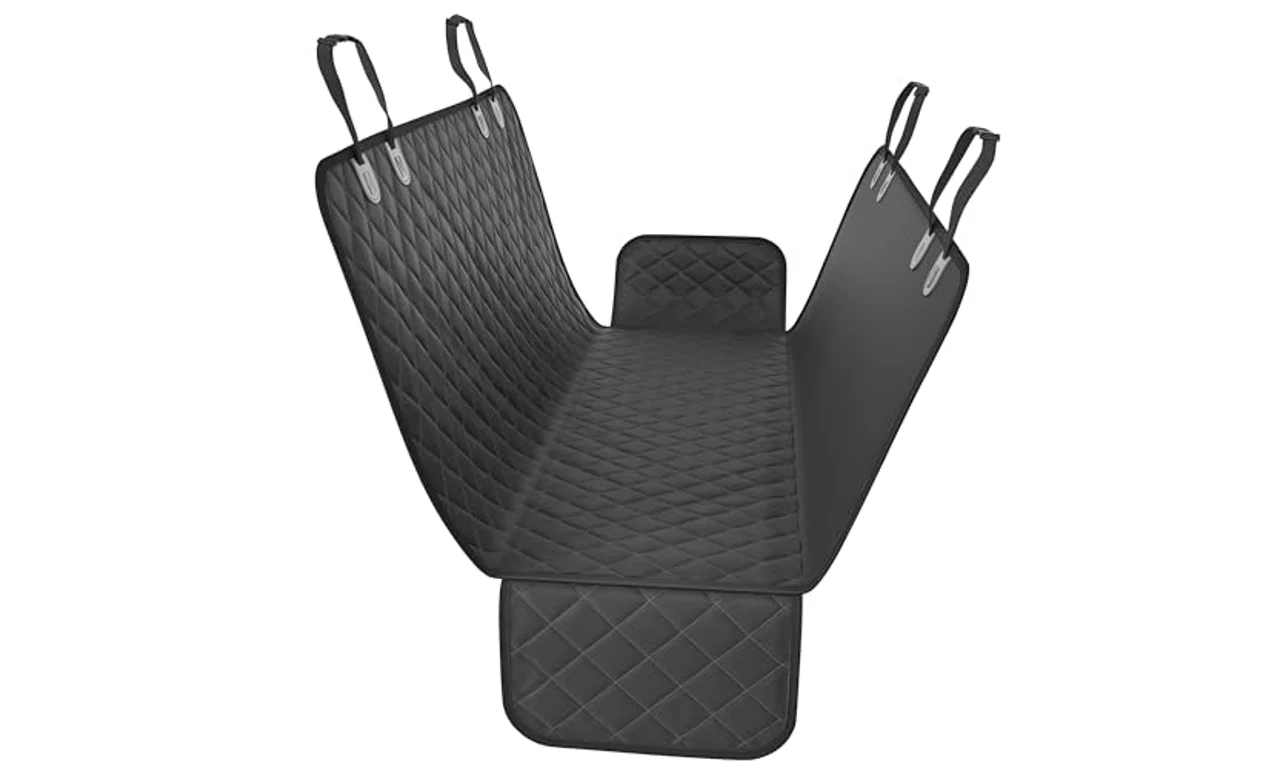
Active Pets Black XL Dog Car Hammock
The same hammock recommended for Labs and Goldens is the default GSD pick for show-line dogs and smaller working-line GSDs under 85 lbs. 900D heavy-duty fabric handles the wear from a large dog with strong nails, the four anchor points keep the hammock taut, and the size is genuinely XL (fits a 28-inch-tall dog without compression).
Check price on Amazon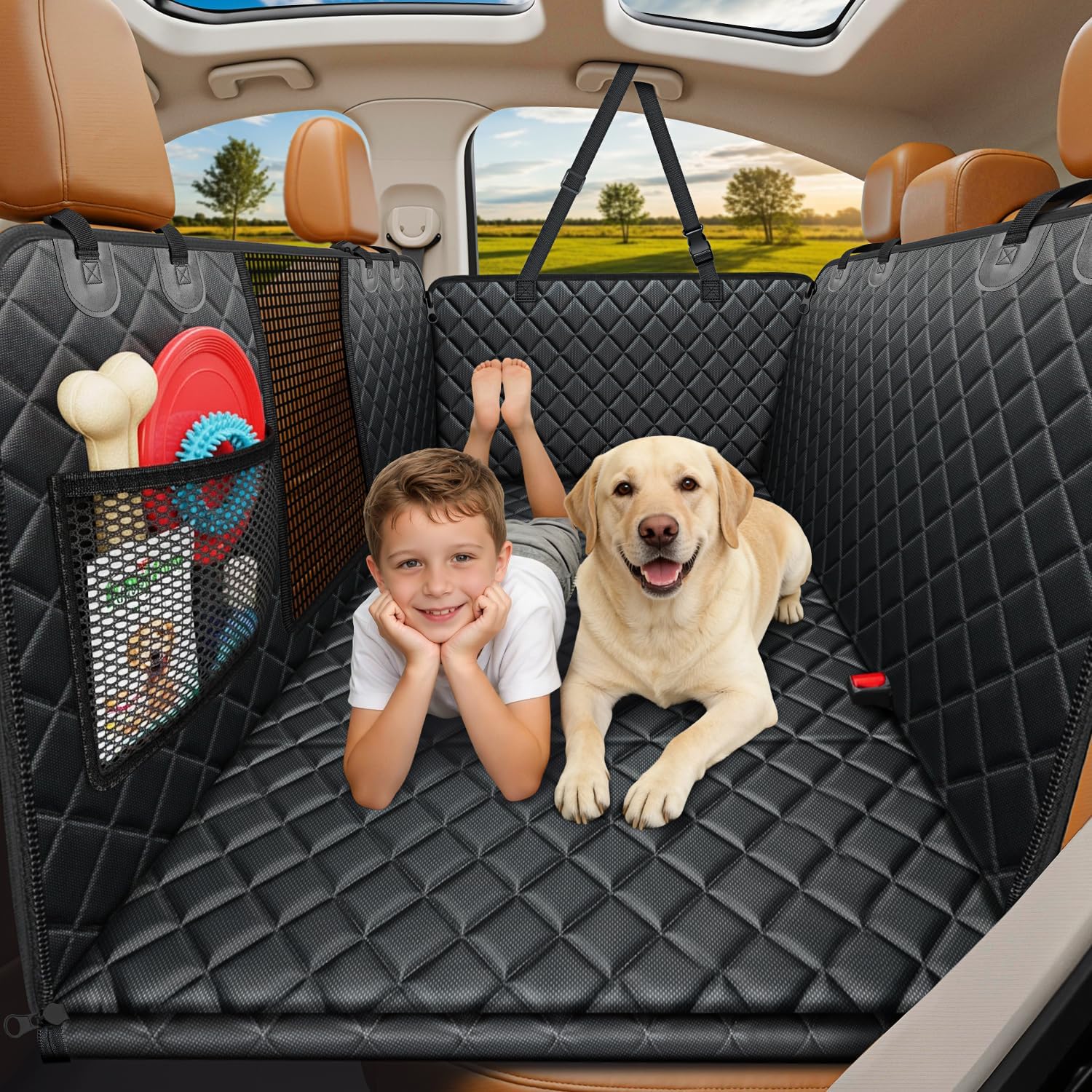
URPOWER Hard-Bottom Extender
For GSDs that hike, swim, or come back to the car wet and dirty, the hard-bottom extender solves the water-pooling problem of a soft hammock by giving liquid a firm surface to run off. It turns the back seat into a flat platform with about 45 percent more usable space and holds up to 400 lbs, so a 90 lb working dog can stand and turn without bottoming out. The 600D Oxford shell wipes clean, and the high side wings shield the doors from muddy paws.
Check price on Amazon
ELLINI Heavy-Duty Seat Cover
The price-conscious pick at under $30. 600D heavy-duty fabric with a scratch-proof waterproof face and a hard bottom rated to 400 lbs covers the basics for an older or calmer GSD that lies still on the drive. The lighter denier shows wear faster under a high-energy working dog with strong nails, so for protection-sport and working-line GSDs the heavier Active Pets is the better spend; for an average family Shepherd, the ELLINI does the job for less.
Check price on Amazon
LEHNI Mesh-Window Seat Cover
The center mesh window addresses two GSD-specific issues at once: line-of-sight to the driver, which settles dogs that get separation-stressed, and airflow, which helps with the breed significant body-heat output on long drives. The waterproof hard bottom gives a senior GSD with stiff hips a flat, stable surface to stand on instead of a sagging sling. Senior and anxious Shepherds in particular benefit from being able to see their handler the whole drive.
Check price on Amazon
Amazon Basics 4-Door Folding Soft Crate
The Amazon Basics soft crate is included as the small-dog example, but the same product line scales up to larger sizes for GSDs (a 90 lb GSD needs the XL version at around $100-150, which is outside our top-30 catalog). For full-size GSDs in SUV cargo areas, a hard-sided crate from companies like Gunner or Ruff Land is the gold standard. The soft crate linked here works for smaller female GSDs or for backup containment but is not the primary safety pick for working-line dogs.
Check price on AmazonComparison at a glance
| Pick | Price | Rating | Best for | Key feature |
|---|---|---|---|---|
| Active Pets XL | $44.98 | 4.6 (50,831) | Show-line GSDs, default | 900D heavy-duty fabric |
| URPOWER Hard-Bottom | $38.99 | 4.5 (2,310) | Active / wet GSDs | Hard bottom drains water |
| ELLINI Heavy-Duty | $29.99 | 4.4 (758) | Best value | 600D, hard bottom |
| LEHNI Mesh-Window | $32.39 | 4.5 (696) | Senior / anxious GSDs | Center mesh window |
| Amazon Basics Soft Crate | $72.55 | 4.3 (18,880) | Cargo area containment | Folding, transportable |
Back seat vs cargo area for GSDs
The decision is driven by three factors: dog size, vehicle type, and dog temperament.
| Configuration | Best for | Caveat |
|---|---|---|
| Back seat with hammock and harness | Show-line GSDs under 85 lbs, sedans and compact SUVs | Dog occupies whole bench seat; rear passengers limited. |
| Cargo area with hard-sided crate | Working-line GSDs over 85 lbs, full-size SUVs | Crate must be anchored to actual cargo tie-down points, not soft hooks. |
| Cargo area with hammock (no crate) | Calm GSDs that travel solo | Less crash protection than a crate; no isolation from cabin debris. |
Harness fit for German Shepherds
GSD harness fit is more straightforward than for brachycephalic or chondrodystrophic breeds because the proportions are normal. Two breed-specific notes:
- Working-line GSDs have more muscular chests than show-line. A harness sized to a show-line GSD's measurements may not fit a working-line dog of the same nominal weight. Measure, do not assume.
- Senior GSDs lose muscle mass. A harness fitted to an 8-year-old GSD will be too loose at 12. Re-check fit annually as the dog ages.
The K-9 and service-dog context
For owners of working GSDs (police K-9 retirees, service dogs, protection-sport dogs), the car-seat decision is often part of the operational kit. Police and military K-9 vehicles are purpose-built with cargo-area kennels and bulkhead separators; civilian owners do not need that level of equipment, but the principle is the same: separate the dog from the cabin during transit. A hard-sided crate in an SUV cargo area is the civilian version of that setup.
For service-dog owners, the harness is usually the working harness the dog already wears, and the car-seat decision is about where the dog rides (cargo, back seat, or front floor under the seat for highly-trained service dogs). The specific configuration depends on the service organization's training protocol; this guide is the consumer overview, not the service-dog operational guide.
For the full ranked list of dog car hammocks, see our hammock category page. For carriers and crates, see the carrier page.
Frequently asked questions
What is the best car seat for a German Shepherd?
For show-line GSDs under 85 lbs in sedans or compact SUVs, the Active Pets XL hammock ($44.98, 50,831 reviews) is the standard pick. For working-line GSDs over 85 lbs or full-size SUVs, a crash-tested hard-sided crate in the cargo area is the safer configuration.
Can a GSD use a booster seat?
No. Booster seats are rated for dogs under 25 lbs. Even small female GSDs weigh well above that. The product category for GSDs is hammocks, seat covers, or hard-sided crates.
Should I use the back seat or the cargo area for my GSD?
Depends on dog size, vehicle type, and dog temperament. Show-line GSDs in sedans use the back seat with a hammock. Working-line GSDs in full-size SUVs use the cargo area with a hard-sided crate. The cargo crate is generally the safer configuration when the dog tolerates it.
When should I get a ramp for my GSD?
By age 7 for most show-line GSDs, earlier for working-line dogs or any GSD with diagnosed hip or elbow dysplasia. Jumping down from a sedan back seat is the single highest-load motion in daily GSD life and the most-preventable trigger for joint pain.
Are GSDs safe in a soft-sided crate?
For travel, no. Soft crates contain calm dogs but are not crash restraints. For GSDs that need cargo-area containment, use a hard-sided crate (gold standards include Gunner and Ruff Land). The soft crate linked in our picks works for smaller female GSDs or as backup containment but is not the primary safety choice for working-line dogs.
Do GSDs get motion sickness?
Some do, but it is less common than in brachycephalic breeds. If your GSD pants heavily or drools during drives without other heat signals, motion sickness may be the cause. Speak to your vet about Cerenia, the prescription anti-nausea medication for travel.
How do I clean a hammock with GSD shedding?
Plan on a 2 to 4 week wash cycle, more often during the twice-yearly heavy shed (spring and fall). A machine-washable hammock makes this routine; spot-clean-only covers do not. Look for hammocks specifically marketed as "machine washable in home washer" rather than "wipe clean."