
Best dog car seat for Boston Terriers (2026): 5 brachycephalic-aware picks
Key takeaways
- Boston Terriers (12 to 25 lbs adult) sit between Pugs and French Bulldogs on the brachycephalic scale. The breed has compromised airway anatomy, prominent eyes, and limited heat tolerance. Car-seat choice should reflect this.
- Three AKC size brackets matter: toy under 15 lbs, medium 15 to 20 lbs, heavyweight 20 to 25 lbs. The right booster depends on which bracket your Boston is in.
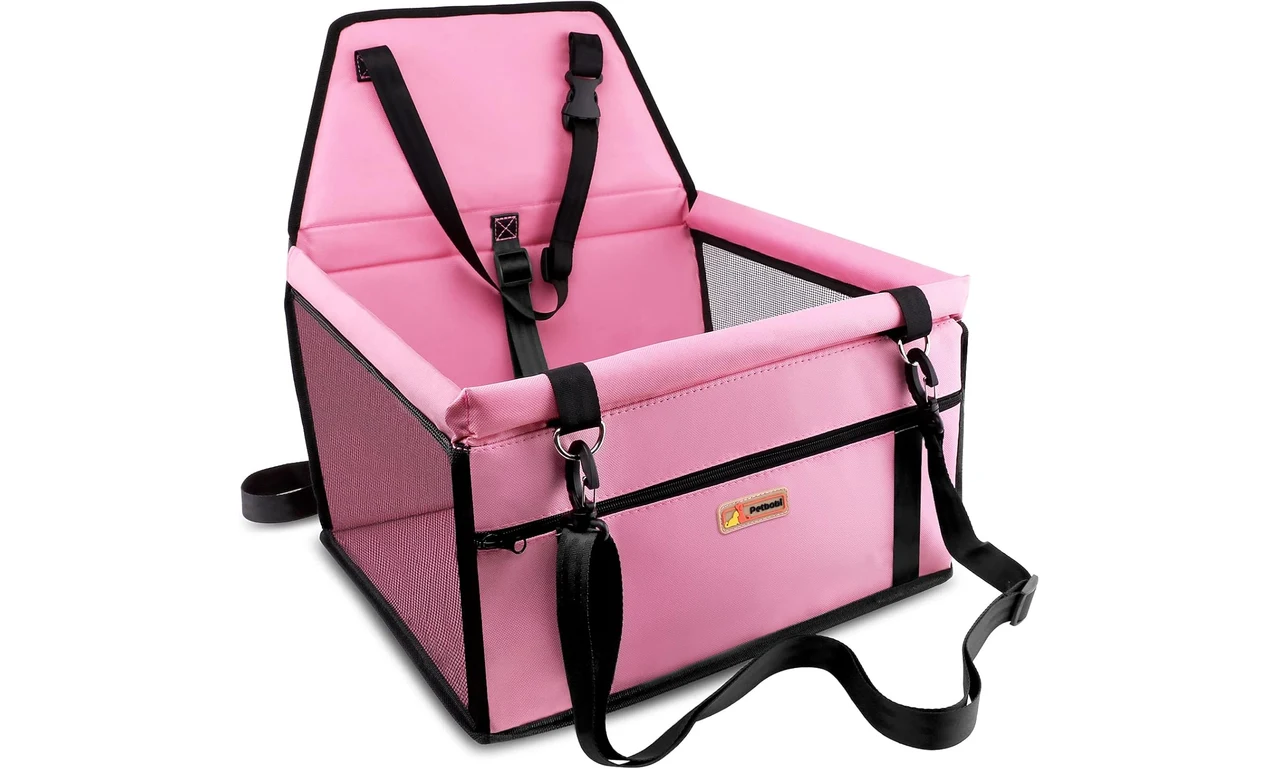
- The Petbobi Reinforced Breathable Booster ($18.99, 10,405 reviews) is our breed-specific top pick because of its open-mesh sides; ventilation matters more than padding for any brachycephalic dog.
- Eye prominence and patellar luxation prevalence (about 6 percent in the breed per OFA) mean a stable, padded enclosure is preferred over an open hammock for most Bostons.
- For routine vet visits, the GAPZER top-load carrier ($27.99) fits Bostons up to about 25 lbs and loads from the top, which is gentler on a short-necked dog than a front-zip carrier.
Boston Terriers are the brachycephalic breed most likely to be misunderstood. They are smaller than English Bulldogs, less extreme than Pugs, and more athletic than French Bulldogs, all of which means owners often underestimate the breed's breathing and heat sensitivity. A Boston in a high-walled booster on a 75 F day with windows up develops respiratory distress faster than the equivalent Cocker Spaniel of the same weight. The car-seat choice should reflect that.
If you came here from our French Bulldog or Pug guides, most of the principles transfer. The Boston-specific differences are tighter weight brackets, more athletic temperament (which means less hammock-style passivity), and the breed's tendency toward eye injuries from sudden deceleration. We cover each below.
Why Boston Terriers need brachycephalic-aware choices
BOAS, less severe than Pugs but more than expected
Brachycephalic Obstructive Airway Syndrome in Bostons is less extreme than in Pugs or English Bulldogs but more common than the breed's lean athletic build suggests. Stenotic nares (narrowed nostrils), elongated soft palate, and (less commonly) tracheal hypoplasia produce audible breathing under stress or heat in roughly 30 to 50 percent of the breed.
What this means practically:
- Open-mesh ventilation beats deep padding. Trapped heat around a Boston's body raises core temperature faster than around a non-brachycephalic small dog.
- Harness fit cannot compress the chest. A harness too tight across the sternum restricts diaphragm movement, which compounds BOAS.
- AC is non-negotiable above 70 F. Bostons cool by panting through a compromised airway. Active cooling is required, especially in summer.
Eye prominence and braking forces
Bostons have prominent eyes set in shallow sockets, similar to Pugs but less extreme. Sudden deceleration can displace the eye forward (proptosis), which is a veterinary emergency. The booster choice should contain the dog's position during sudden stops to reduce the risk.
Two design implications:
- Padded sidewalls. A booster with foam sidewalls absorbs impact if the dog is thrown forward. Hard-edged frames are dangerous in this scenario.
- Short tether. 6 to 12 inches maximum. Long tethers let the dog build momentum before catching.
Three weight brackets, three different right products
The AKC Boston Terrier standard splits the breed into three weight classes: under 15 lbs (toy), 15 to 20 lbs (medium), and 20 to 25 lbs (heavyweight). The right car-seat product changes across brackets.
| Boston bracket | Adult weight | Best booster pick | Best carrier pick |
|---|---|---|---|
| Toy | Under 15 lbs | Petbobi Mesh ($18.99) | GAPZER Top-Load ($27.99) |
| Medium | 15 to 20 lbs | ZOMISIA Cooling ($39.99) | GAPZER Top-Load ($27.99) |
| Heavyweight | 20 to 25 lbs | PETICON Memory Foam ($39.99) | Amazon Basics Hard Carrier ($36.63) |
Our 5 picks for Boston Terriers

Petbobi Reinforced Breathable Booster
The breed-specific top pick. Open mesh side panels (the largest mesh ratio in our top 5) maximize airflow and prevent heat from pooling around the dog. For a brachycephalic breed, the airflow advantage matters more than the padding shortfall. The 4.2 rating reflects a shorter cushion lifespan than memory foam alternatives, but the breed-specific use case is right. Best for toy and medium Bostons.
Check price on Amazon
iBuddy Cover with Mesh Window
Not a booster but a seat-cover hammock. Included because some Bostons prefer to lie flat on the bench rather than sit elevated. The center mesh window provides line-of-sight to the driver (reduces anxiety) and direct airflow (reduces heat). For active Boston temperaments that fight elevation, this is the alternative configuration.
Check price on Amazon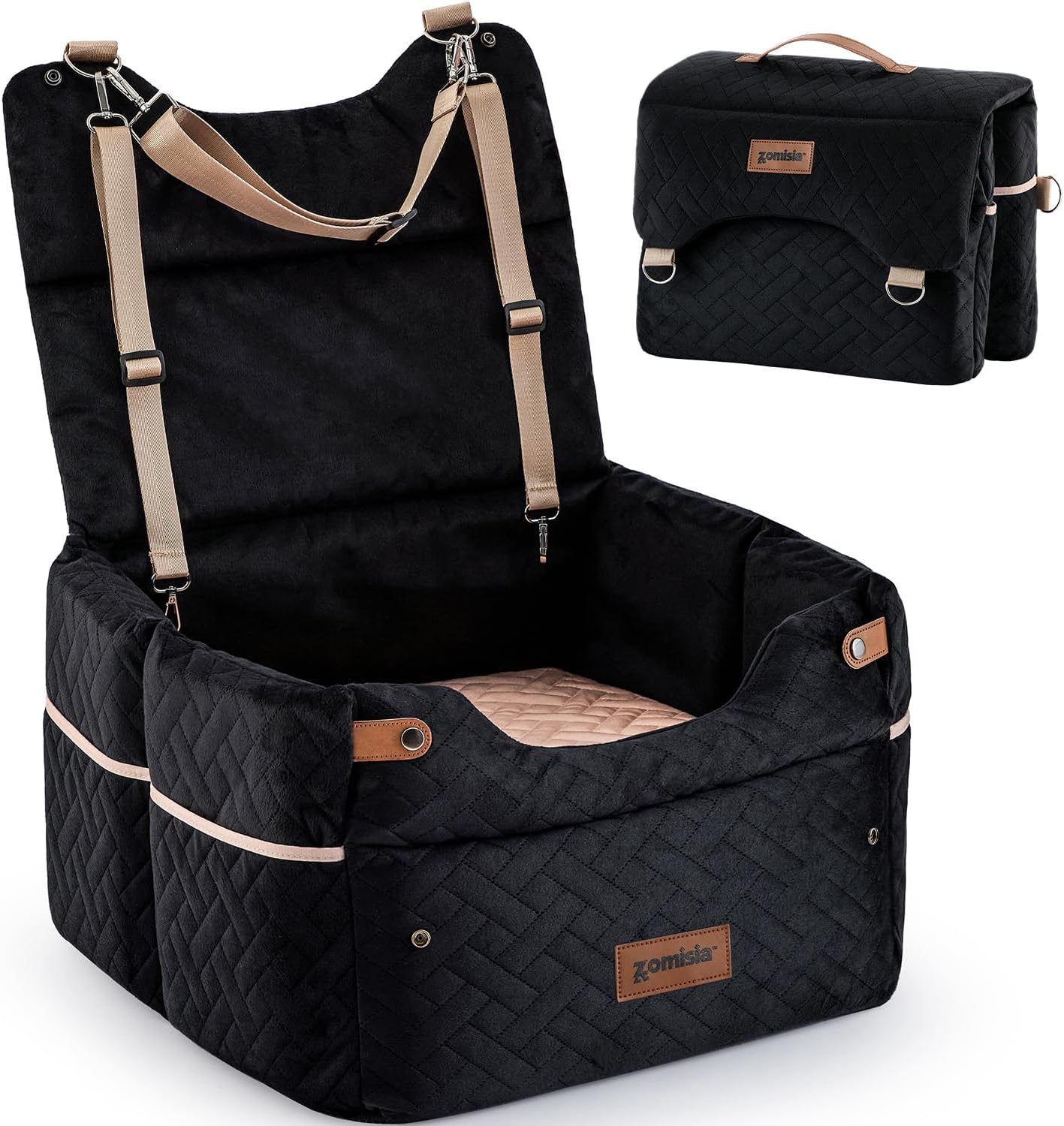
ZOMISIA Cooling Elevated Booster
The breed-aware upgrade for hot months. The dual-sided cover has a cooling face that pulls heat away from a brachycephalic dog that cannot pant efficiently, and the two egg-crate foam inserts stack into three heights (2, 4, or 6 inches) so a medium or heavyweight Boston gets horizon visibility without a hot, padded enclosure. The waterproof shell wipes clean after a drooling, panting summer drive. Rated for 20-30 lb dogs, so it covers the medium and heavyweight brackets.
Check price on Amazon
PETICON Waterproof Memory Foam Booster
6 inches of high-density memory foam absorbs the road vibration that ordinary polyfill transmits straight into a Boston with patellar luxation or early joint disease. The 26 lb capacity fits the heavyweight bracket of the breed, and the 100 percent waterproof liner under a machine-washable cover handles the rope-like drool a stressed brachycephalic dog produces. Best for senior Bostons (8+ years) or heavyweight dogs at the top of the AKC standard.
Check price on Amazon
GAPZER Top-Load Travel Carrier
For routine vet visits and short trips, the top-loading design lets you lower a stressed Boston in from above instead of pushing them through a narrow front zipper, which is gentler on a short-necked brachycephalic dog. The 18x11x11 inch body fits toy through heavyweight Bostons up to about 25 lbs, and mesh on multiple sides keeps airflow moving for a breed that overheats fast. Self-locking zippers stop a determined escape artist.
Check price on AmazonComparison at a glance
| Pick | Price | Rating | Best for | Key feature |
|---|---|---|---|---|
| Petbobi Breathable | $18.99 | 4.2 (10,405) | Default Boston pick | Maximum mesh airflow |
| iBuddy Mesh Cover | $29.99 | 4.6 (9,135) | Bostons that lie flat | Center mesh + airflow |
| ZOMISIA Cooling Booster | $39.99 | 4.6 (71) | Warm-climate Bostons | Cooling cover, 3 heights |
| PETICON Memory Foam | $39.99 | 4.6 (144) | Senior or heavyweight Bostons | Waterproof + vibration absorption |
| GAPZER Top-Load Carrier | $27.99 | 4.6 (505) | Vet trips, short drives | Top-load, mesh airflow |
Heat management for Boston Terriers
The Boston Terrier's short coat and athletic build hide a meaningful heat vulnerability. The dog's body looks lean enough to cool efficiently, but the airway constraints limit panting effectiveness. Two practical rules:
- Never leave a Boston alone in a car, even briefly. Cabin temperature rises 30 F in 30 minutes even on a 70 F day. For a brachycephalic breed, that crosses from uncomfortable to medically dangerous in under 15 minutes.
- Run AC on any drive over 5 minutes above 70 F. A Boston panting from stress or heat raises cabin humidity, which compounds the cooling problem. Active cooling resets the loop.
Harness fit for Bostons
Boston harness fit is straightforward but the breed's short neck and prominent chest create some standard-harness issues.
- Measure chest girth at the widest point, typically 16 to 22 inches for adult Bostons.
- Look for harnesses with adjustable neck and chest independently. A fixed-ratio harness designed for a longer-necked breed sits wrong on a Boston.
- Chest plate forward of the trachea. The plate should rest on the breastbone, not the throat. For a brachycephalic dog this matters more than for other breeds.
- Two-finger fit, no compression at rest. A harness that feels right on a calm Boston will be too tight when the dog inhales hard from stress or heat.
Patellar luxation and joint stability
Boston Terriers have a documented prevalence of patellar luxation (kneecap displacement) of around 6 percent per OFA breed statistics. The condition develops over years and is often asymptomatic in young dogs. For senior Bostons (8+ years), road vibration through a thin foam booster can aggravate the joints.
What helps:
- Memory foam padding reduces vibration transmission to the joints during normal driving.
- Pet ramps for SUVs and tall sedans. Jumping in and out of a high vehicle accelerates patellar wear. A foldable ramp ($60 to $120) extends mobility years.
- Vet check at 7 years, including knee palpation. Early-stage luxation is often managed conservatively; late-stage requires surgery.
Motion sickness
Bostons get motion sickness less often than Pugs but more often than non-brachycephalic small breeds. The combination of vestibular sensitivity, anxious temperament in some lines, and airway constraints makes some Bostons unhappy car riders.
What helps:
- Elevate so the dog sees the horizon. A 6-inch booster fixes this.
- Acclimate gradually. Start with 5-minute drives ending at positive destinations.
- Cerenia for persistent cases. Available by prescription from your vet.
For the full ranked list of boosters and carriers, see our booster category page and carrier page.
Frequently asked questions
What is the best car seat for a Boston Terrier?
The Petbobi Reinforced Breathable Booster ($18.99, 10,405 reviews) is our breed-specific top pick because of its open mesh sides. Bostons are brachycephalic and benefit from ventilation more than from deep padding. For senior or heavyweight Bostons, the PETICON Waterproof Memory Foam booster ($39.99) is the right pick.
Are Boston Terriers brachycephalic?
Yes, although less severely than Pugs or English Bulldogs. The breed has stenotic nares (narrowed nostrils) and often an elongated soft palate, which causes audible breathing under stress or heat in 30 to 50 percent of the breed. BOAS-aware product choices and active AC make a real difference.
How heavy is a typical Boston Terrier?
The AKC standard splits the breed into three weight brackets: toy under 15 lbs, medium 15 to 20 lbs, heavyweight 20 to 25 lbs. The right product depends on the bracket; toy Bostons fit the GAPZER top-load carrier, medium Bostons fit standard small-dog boosters, heavyweight Bostons need products rated to 25 lbs.
Should I use a carrier or booster for my Boston?
For drives over 20 minutes, use a booster paired with a harness clipped to the seat belt. For routine vet visits and short trips, a soft carrier is lower stress. The GAPZER top-load carrier fits Bostons up to about 25 lbs across all three brackets.
Can my Boston ride in the front seat?
No. Front airbags can kill or seriously injure a 15 to 25 lb dog when they deploy. Always put the dog in the back seat. The 2nd-row bench is the right spot for any small or medium dog.
What about heat in summer?
Bostons cool inefficiently because of airway constraints. Run AC on any drive over 5 minutes when temperatures are above 70 F. Never leave a Boston alone in a parked car, even briefly. Cabin temperature rises 30 F in 30 minutes on a warm day, and a Boston cannot tolerate that range.
Do Bostons get carsick?
Some do, especially as puppies. Elevating the dog so they can see the horizon usually helps. For persistent motion sickness, Cerenia (prescription anti-nausea medication) is available from your veterinarian. Most adult Bostons outgrow motion sickness by 12 to 18 months.