Dog car seat vs harness vs crate: which is safest?
Three product categories solve the same problem in different ways. We compare booster seats, crash-tested harnesses, and hard-sided crates on safety performance, comfort, vehicle fit, and price.
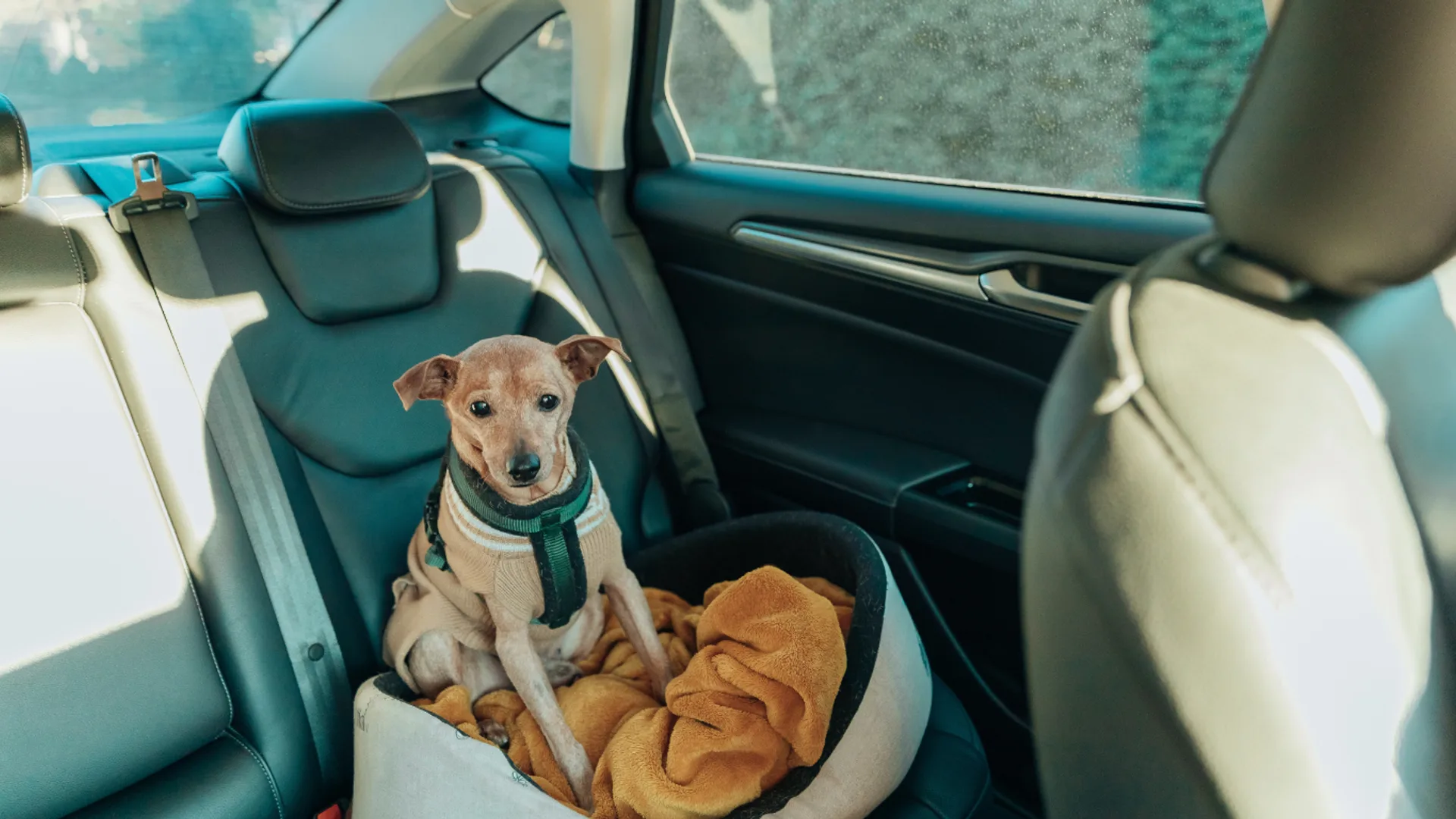
Three product categories dominate the dog car safety market: booster seats, crash-tested harnesses, and hard-sided travel crates. Each solves a different version of the same problem, which is keeping a dog safely contained during a drive. None of them is universally “best.” The right answer depends on the dog and the vehicle.
This guide compares all three on the dimensions that actually matter: crash performance, comfort, vehicle compatibility, ease of use, and cost. The recommendations at the end are sized by dog weight, which is the strongest single signal for which restraint to use.
The three options at a glance
| Method | Best for | Crash protection | Comfort | Cost (typical) |
|---|---|---|---|---|
| Booster seat + harness | Dogs under 25 lbs | Moderate (harness does the work) | High | $35 to $80 + harness |
| Crash-tested harness on bench | Dogs 25 to 50 lbs | High (when properly fitted) | Moderate | $45 to $120 |
| Hard-sided crate, anchored | Dogs 50+ lbs, SUVs only | Highest (when properly anchored) | Low to moderate | $120 to $400 |
The pattern in the table: as dog size increases, the restraint shifts from cabin to cargo, and from soft to hard. That is not a coincidence. Larger dogs generate more kinetic energy in a crash and need more substantial structures to contain them.
Booster seat plus harness
A dog booster seat is an elevated soft-sided seat that anchors to the back seat with the seat belt. Most include short interior tethers that clip to a separately worn harness. The booster lifts the dog high enough to see out the window and contains them in roughly a 12-inch by 18-inch footprint.
What it does well
- Comfort. Soft fabric, memory foam padding, and a familiar bed-like shape mean most small dogs settle into a booster within a few rides.
- Visual access. Lifting the dog 6 to 8 inches above the seat lets them see out the window, which reduces motion sickness and barking in many dogs.
- Containment. The bucket-like shape prevents the dog from pacing or jumping between seats, even in normal driving.
What it does not do
- Crash restraint. The booster itself is not crash rated. Without a harness, a dog in a booster will be thrown out of it during a hard stop or collision.
- Scale. Boosters are designed for dogs under about 25 lbs. Larger dogs do not fit physically and the materials are not rated for higher kinetic loads.
Crash-tested harness, used on the back seat
A crash-tested dog car harness is a multi-strap garment worn by the dog, with a built-in tether or clip designed to attach to a vehicle seat belt or LATCH anchor. The harness itself is the load-bearing crash structure.
What it does well
- Documented crash performance. A subset of harness brands have passed independent 30 mph testing with documented dummy weights and pass/fail results. This is the closest the pet category gets to FMVSS-style child seat performance.
- Vehicle compatibility. A harness fits any vehicle that has a seat belt. No vehicle-specific anchoring required.
- Scaling. Crash-tested harnesses are commonly available in sizes from 10 lbs to 100+ lbs.
What it does not do
- Comfort, generally. A properly fitted crash harness is snug. Dogs that are not used to wearing harnesses may resist or chew at it on the first few drives.
- Containment of pacing. The dog can still move within the tether length. Long tethers (over 18 inches) defeat the safety purpose. Short tethers (6 to 12 inches) work but feel restrictive.
The harness is the load-bearing piece. The seat or hammock is the comfort layer.
Hard-sided crate, anchored to the cargo area
For SUVs, station wagons, and hatchbacks, a hard-sided travel crate strapped to the cargo area floor with cargo tie-down points is generally considered the safest option for medium and large dogs. The crate isolates the dog from the passenger cabin entirely and absorbs collision deceleration through its frame.
What it does well
- Highest crash performance. A small number of hard-sided crates have passed crash testing at 30 mph with 75 lb dummies, the toughest test conditions in the pet category.
- Containment in any direction. Unlike harnesses, which restrain forward motion well but lateral motion poorly, a crate constrains the dog in all six directions.
- Post-crash benefits. First responders can approach an injured but contained dog without bite risk. The dog cannot escape into traffic.
What it does not do
- Sedan compatibility. Hard crates do not fit on standard back seats and cannot be safely anchored to seat-mounted seat belts.
- Casual driving. The setup time and storage footprint are real. A crate is great for road trips, awkward for a 10-minute vet drive.
- Comfort in motion. Some dogs vocalize or panic when isolated in a crate, particularly on the first few drives.
Recommendations by dog weight
If you are choosing between the three for a specific dog, here is the simplest decision rule:
Under 25 lbs: booster seat + crash-tested harness
The booster makes the ride comfortable and visible. The harness, ideally one rated for crash testing at the dog’s weight class, does the actual safety job. This combination is what most owners of small dogs end up with after one or two iterations.
Browse our top-ranked options on the dog booster car seats page.
25 to 50 lbs: crash-tested harness on the back seat
Medium dogs typically do not fit comfortably in standard boosters and do not need the visual elevation. A crash-tested harness clipped directly to a back seat belt is the simplest, lightest, most-tested setup for this size class. Add a seat cover to keep the upholstery clean.
50+ lbs: hard-sided crate in the cargo area, or crash-tested harness
If you drive an SUV or wagon, a properly anchored hard-sided crate is the most-tested option for large dogs. If you drive a sedan, a crash-tested harness in the back seat is the realistic alternative. Either way, do not use a soft-sided booster product, which is not designed for the load.
Common mistakes across all three
- Long tether. Tethers over 18 inches let the dog build momentum before the tether catches. Keep tethers between 6 and 12 inches whenever possible.
- Loose harness. A harness that you can fit two fingers under at the chest is properly fitted. Looser than that, and the dog can slip out under crash forces.
- Anchoring to the wrong point. Cargo nets, plastic clips, and aftermarket hooks are not rated for crash loads. Use seat belt latches and OEM cargo tie-down anchors only.
- Front seat. Even with airbags disabled, the front seat is not the right place for a dog. Frontal airbag deployment can kill a small dog on contact, and side curtains do not always disable for pets.
- Tying the dog to the seat with a leash. A walking leash, retractable or otherwise, is not a crash restraint. The hardware will fail under load.
How to test your current setup
If you already have a booster, harness, or crate, run this five-minute audit:
- Pull on the tether or harness clip with both hands until you feel resistance. If you can pull more than two inches before tension, the slack is too long.
- Look at the stitching where the harness webbing meets the D-ring or chest plate. If you see frayed thread or visible fabric stretching, the harness is past its useful life.
- Confirm the seat belt or anchor is fully engaged, not just resting in the latch. Pull the dog product upward; it should not lift more than an inch or two.
- For crates, push the crate forward and laterally with your hand. It should not slide. If it moves, the cargo straps are not tight or the anchor points are wrong.
Frequently asked questions.
Which is safest, a dog car seat, harness, or crate?
For most small dogs, a booster seat plus a crash-tested harness is the practical choice. For medium dogs, a crash-tested harness alone on the back seat. For large dogs in SUVs, a hard-sided crate anchored to cargo tie-downs. There is no universal answer.
Can I use a crate in a sedan?
Hard-sided crates do not fit on or anchor safely to standard back seats. For sedans with medium or large dogs, a crash-tested harness is the realistic option.
Is the front seat ever safe for a dog?
Generally no. Frontal airbag deployment can be fatal even to mid-size dogs, and side curtain airbags do not always disable for non-human passengers. The back seat is the right answer.
Do I really need a separate harness if my booster has a built-in clip?
The clip on most boosters is for containment during normal driving, not for crash forces. A separately purchased crash-tested harness, or a booster from a brand that has independently tested its built-in tether system, is the safer setup.
How tight should the harness be?
Snug enough that you can fit two fingers between the harness and the dog’s chest, but no looser. A loose harness can let the dog slip free under crash forces.
Are seat belt extenders or universal clips safe?
Most aftermarket clip-and-extend products are not crash tested. If your harness needs an extender, the harness is the wrong size or the wrong product. Pick a harness that connects directly to a factory seat belt.
Browse our top dog car seat picks.
We rank the highest-purchased dog booster seats on Amazon by buyer behavior. Real ratings, live prices, no sponsored placements.
See top boosters →